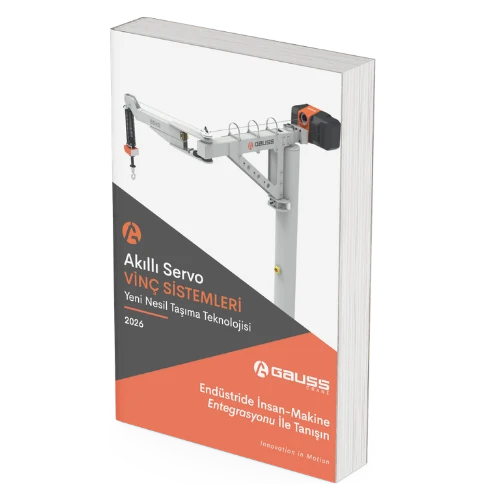
On industrial production lines, handling loads between 80 kg and 600 kg is where operational efficiency is won or lost. The pneumatic systems that have ruled this field for decades are giving way to the smart servo lifting systems Gauss Crane has pioneered. So is this a trend, or a necessity?
The “Invisible” Bill for Pneumatic Systems
Pneumatic cranes may look cheap at the point of purchase, but in operation they are pure “energy monsters”.
Air Leaks: In a typical plant, leaks in the compressed-air pipework mean 20% to 30% of the air produced disappears without ever turning into work.
Thermodynamic Losses: The heat given off while air is compressed pulls efficiency down to around 10-15% measured in mechanical work.
The Engineering Advantages of Servo Technology
Gauss Crane servo-driven systems convert electrical energy directly into kinetic energy. The word “smart” here comes from the fact that the system analyses the load in real time.
- Precision: Taking feedback thousands of times a second, servo drives position the load to a tolerance of 0.1 mm. In precision automotive assembly, or when placing electronic panels, that takes the margin for error to zero.
- Speed and Acceleration: Unlike pneumatic systems, servo control gives a gradual soft start and soft stop. That minimises the pendulum effect of a swinging load, and workplace safety rises with it.
Operating Costs, in Numbers
| Criterion | Pneumatic Crane | Gauss Servo Crane |
|---|---|---|
| Energy Efficiency | 15% | 90% |
| Positioning Precision | +/- 10 mm | +/- 0.1 mm |
| Annual Energy Cost (Example) | €1,000 | €150 |
| Maintenance Interval | 1,000 hours | 5,000 hours |
In short: if energy savings and operational speed are a priority in your plant, moving to servo systems is not a preference — it is a financial strategy for protecting your annual operating budget.